



What Is Heart Rate Variability (HRV) and What Does It Tell You About Recovery?
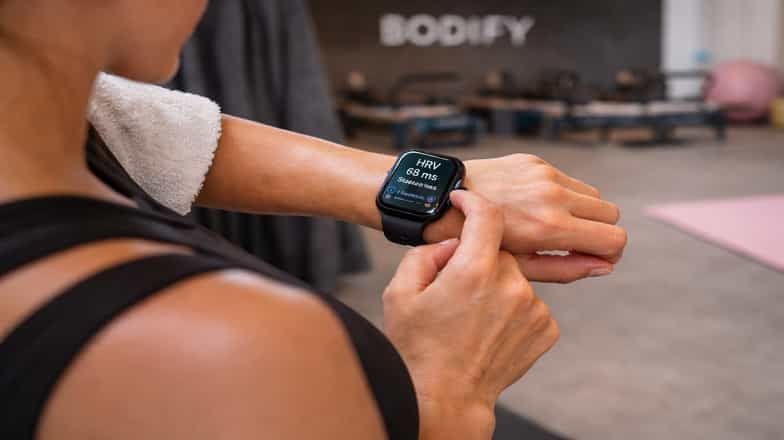
Did you know Heart Rate Variability has become one of the most useful recovery tools in modern fitness? At BODIFY, many of our clients track it through Apple Watch, Garmin, Oura, or Whoop. Still, very few people know how to use it properly! It's why we decided to publish this article, where we explain in detail what to do with this indicator. In simple terms, we'll cover what HRV is, how your nervous system shapes it, what a normal HRV looks like by age, and how to use this number to protect both your training and your overall health.
How the Autonomic Nervous System Affects HRV
Before we look at any numbers, it helps to understand what actually drives heart rate variability. Every heartbeat is controlled by the autonomic nervous system — the part of the nervous system that runs automatic functions like breathing, digestion, and circulation without you thinking about them.
The autonomic nervous system works through two branches that constantly balance each other. The sympathetic nervous system is your "fight-or-flight" side: it speeds the heart up, prepares you for activity, and tends to lower HRV. The parasympathetic nervous system is your "rest-and-digest" side: it slows the heart down, supports recovery, and tends to raise HRV.
When these two branches shift back and forth smoothly, the spacing between your heartbeats keeps changing from moment to moment — and that healthy variation is exactly what HRV captures. Strong parasympathetic activity usually shows up as higher HRV, while heavy sympathetic activity from stress, illness, or hard training pushes it down. So HRV is really a simple window into how well your nervous system is balancing effort and recovery.
What HRV Actually Measures
Your heart doesn't beat like a machine. Even if your heart rate says 70 beats per minute, the time between each beat slightly changes. Those tiny variations are called heart rate variability. These gaps between heartbeats are measured in milliseconds, so the variation is far too small to feel — but a tracker can pick it up.
A higher HRV usually means your nervous system is flexible and adapting well. A lower HRV often means your body is under stress: from training, poor sleep, dehydration, emotional pressure, or even travel.
So, if heart rate tells you how fast your heart is beating, HRV tells you how well your body is adjusting to everything happening around it. That difference matters for fitness enthusiasts.
Why HRV Is So Helpful for Recovery
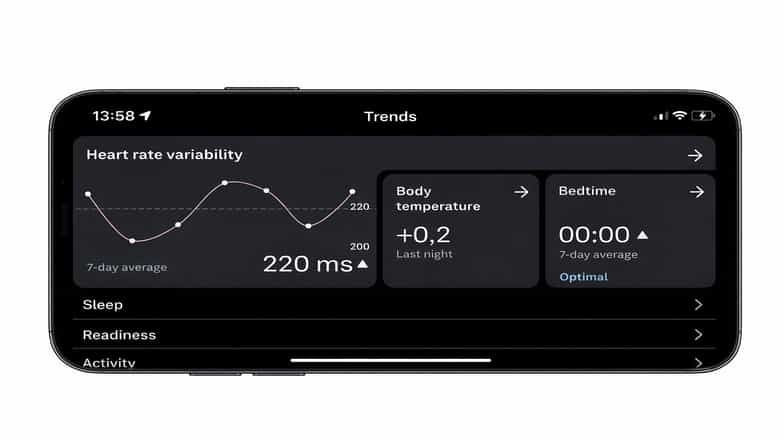
HRV reflects how your nervous system is functioning. When you recover well, your "rest mode" is active. That's when your body repairs muscle tissue, balances hormones, and restores energy. When stress builds up — intense workouts, lack of sleep, deadlines, summer heat — your "action mode" takes over. That's normal. The issue is when it stays there too long. Over time, this makes HRV a practical, everyday marker of both recovery and overall health.
This is where HRV becomes useful. It works like a daily signal from your body.
If your number drops significantly below your usual average, it may be a sign you need a lighter session.
Don't call yourself weak if you see a lower HRV! Hormonal cycles, PMS days, and postpartum recovery — these all influence it. It doesn't mean you should stop training. It simply means you have to adjust the intensity.
Some days are perfect for a strong calorie-burning class. Other days, Pilates or stretching will do more for your long-term results.
What Is a Normal HRV?
This is the question everyone asks us, and the honest answer is: it depends. There isn't one perfect number. HRV varies from person to person based on age, fitness level, sleep quality, stress, and genetics.
Normal HRV by age (approximate reference ranges)
| Age group | Average HRV (ms) | Common range (ms) |
| 18–25 | ~68 | 55–105 |
| 26–35 | ~60 | 48–95 |
| 36–45 | ~52 | 40–85 |
| 46–55 | ~46 | 33–75 |
| 56–65 | ~42 | 28–70 |
| 65+ | ~38 | 25–65 |
For one woman, 35 ms is normal. For another, 85 ms is normal. Comparing your number to someone else's rarely helps. The real value comes from tracking your own baseline.
If your HRV usually sits around 60 and suddenly drops to 42 for several mornings in a row, your body is probably asking for recovery.
HRV and Life in Dubai
Living in Dubai adds a few extra recovery challenges — even if you're consistent with workouts.
Heat and humidity increase physical stress. Dehydration is common, even among active women. Air conditioning can disrupt sleep quality. Add travel, late dinners, and long workdays, and your nervous system rarely gets full downtime.
You might feel "fine," but HRV often shows the hidden load. That awareness just lets you train smarter.
How to Use HRV When Choosing a Workout
If your HRV is steady or slightly higher than usual, your body is likely ready for intensity. That might be the right day for:
- Calorie Burn or Bootcamp sessions;
- Strength-focused classes;
- Kangoo Jumps;
- Dance-based cardio.
If your HRV is noticeably lower than your norm, a recovery-focused class may actually support better long-term results:
- Pilates;
- Stretching;
- Yoga or Aero Yoga;
- Healthy Back classes.
Consistency beats intensity. When your training adapts to your recovery, progress feels smoother.
The Devices That Track HRV
A few years ago, HRV was mostly used by elite athletes. Now it's accessible to almost everyone. Common trackers include:
- Apple Watch;
- Garmin;
- Oura Ring;
- Whoop;
- Polar heart monitors.
Each device calculates HRV slightly differently, so the exact number may vary. Use the same device, measure under similar conditions, and focus on trends instead of daily fluctuations.
A lower score in the morning can reflect a late night, a stressful meeting, travel fatigue, or simply a heavier day for your nervous system. The most useful approach is to look at your overall trend, not one single number.
Factors that Affect Heart Rate Variability
Knowing the main factors that affect heart rate variability makes each reading far easier to interpret:
- Sleep: short or broken sleep is one of the fastest ways to see HRV drop; consistent, good-quality sleep is one of its strongest supports.
- Stress: ongoing mental or emotional stress keeps sympathetic activity elevated and tends to lower HRV, even on rest days.
- Training load: hard sessions temporarily reduce HRV while your body repairs; several intense days in a row without recovery can keep it suppressed.
- Hydration and nutrition: dehydration and heavy late meals both add strain your nervous system has to manage.
- Alcohol and caffeine: both can disturb sleep and nervous-system balance, often lowering next-morning HRV.
- Age and hormones: HRV naturally changes with age, and shifts across the menstrual cycle, PMS, and postpartum recovery all influence it.
- Health and illness: a drop in HRV can appear a day or two before you feel a cold coming on, which is why sudden changes are worth noticing.
None of these factors work in isolation. On any given morning, your HRV reflects the combined load of your sleep, stress, activity, and general health — which is exactly why trends tell a clearer story than a single reading.
How to Improve Your Heart Rate Variability
The good news is that heart rate variability responds well to healthy, consistent habits. You can't force the number overnight, but you can improve your baseline over a few weeks by giving your nervous system regular chances to recover.
You can influence HRV. Small habits make a difference:
- Sleep 7–9 hours;
- Drink enough water;
- Add electrolytes if you sweat heavily;
- Avoid heavy meals late at night;
- Include mobility work during the week;
- Step outside for natural light in the morning.
Recovery is not something you "deserve" after pushing hard. It's part of the training plan.
How to Apply This in Real Life
Heart Rate Variability won't replace good coaching. It won't replace listening to your body. But it can help you make smarter choices, especially in a fast-paced city like Dubai.
At BODIFY, the variety of classes allows you to adjust intensity without skipping training altogether. Some days you challenge yourself. Other days you support recovery.
If you're curious how different training styles affect your recovery, explore our class schedule and find the format that matches your energy today. Your body already tells you what it needs. HRV just helps you hear it more clearly.