



What Is Mind-Muscle Connection and How It Improves Exercise Quality
Did you know the way you move during your workout often matters more than how long you train? This article contains explanations!
If you want to join structured sessions like Bodify’s group training, on the main page, there is always an advantageous beginner offer; check it out!
What mind-muscle connection really is

Mind-muscle connection is your ability to consciously feel and control the muscle you’re trying to train.
Instead of just completing reps, you pay attention to where tension builds. You notice whether your glutes activate in a squat, whether your back engages in a row, and whether your core stays stable during lunges.
Once that awareness clicks, exercises feel harder, but way more effective.
A simple comparison
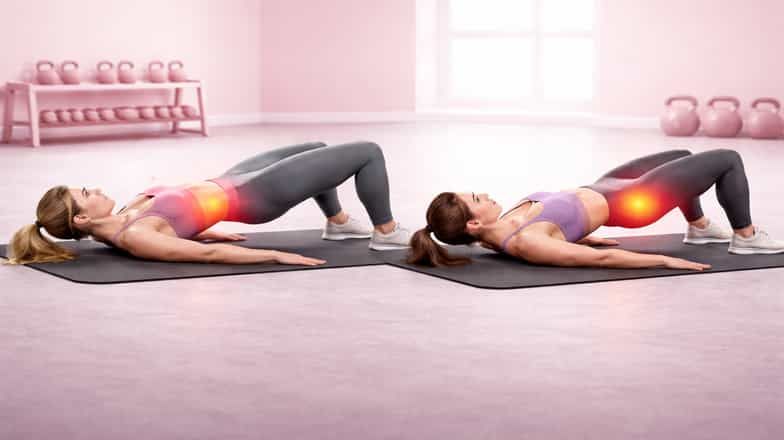
Two women perform the same glute bridge.
One feels pressure in her lower back.
The other feels strong contraction in her glutes.
The movement looks identical from the outside. But who do you think trains her glutes better?
Why exercise quality matters more than reps
Many people measure progress by time spent in the gym or by heavier weights. We wouldn’t call it the most efficient measurement.
Better form happens naturally
When you focus on feeling the right muscles working, you start noticing small things that usually get missed, like:
- your shoulders creeping up during rows,
- your knees collapsing inward in squats,
- your ribs flaring during core exercises.
Once you notice it, you can fix it. Fixing it consistently builds better movement patterns, and that’s what makes training safer, stronger, and more effective over time.
The same workout feels more effective
This surprises many women. A lighter weight can feel challenging when the right muscle is doing the work. The burn feels focused rather than scattered! That’s helpful on lower-energy days, or when you don’t have enough weights at home or during vacation. You still leave the session feeling accomplished!
Training becomes intentional
When attention shifts to muscle engagement, workouts slow down in the best way. Many women describe this as more satisfying, effort feels directed and purposeful. Partly, a workout becomes a meditation, a work with our minds.
How to build mind–muscle connection
This skill develops with practice. Here are some ways to strengthen it.
Slow the tempo
Speed hides detail. Try lifting for two seconds and lowering for two to three. Add a short pause at the most challenging point. The target muscle becomes much easier to feel.
Adjust the weight
Heavier loads create effort. Lighter loads create control.
If a back exercise feels mostly in the shoulders, reduce the weight and focus on pulling through the elbows. Engagement usually improves within a few reps.
Add pauses
Holding the top of a glute bridge or the midpoint of a squat forces the muscle to stay active. Control increases.
Use clear internal cues
Simple instructions guide the body:
- “Press through your heel.”
- “Pull your shoulder blades back.”
- “Brace your core.”
- “Push the floor away.”
Clear cues create clear movement.
Where connection gets lost

Sometimes another muscle group takes over without you noticing.
Shoulder and neck tension
Daily stress and long desk hours often create tight shoulders. During rows or presses, the neck may start hurting. Reset posture before each set and soften the shoulders down.
Momentum replaces control

Fast reps feel powerful, yet muscle awareness fades. Slowing the movement often restores control immediately.
Core relaxes
When the core disengages, the lower back compensates. Do a steady exhale before the lift; it can bring stability back.
Tools that support better awareness
Technology helps, though attention stays the foundation.
Short videos
Watching your alignment in real time highlights small shifts in posture! Do a quick video clip of you training; it can reveal uneven hips or shoulder rotation that you might miss in the moment.
Resistance bands
Bands create steady tension, so you can feel muscle engagement more easily. That’s why many trainers use them in warm-ups, especially for glutes and shoulders.
Controlled strength formats
Pilates-inspired strength sessions and slower circuits naturally build mind–muscle connection. It’s why many people need and love Pilates! The emphasis on breathing and alignment strengthens awareness alongside muscle tone.
Training with more intention
Mind–muscle connection shifts training from repetition to focus. You feel the muscle working. You guide the movement instead of rushing through it. The same session begins to deliver more.
If you’d like to experience this in a coached environment, explore the training formats and group classes at Bodify. With structured sessions and clear guidance, that connection becomes something you build week after week, and the quality of your movement keeps improving from there!