


Why Deload Weeks Are Important for Long-Term Strength and Muscle Gains
In Dubai, people train hard, train often, and expect results quickly. Many women build routines around early morning workouts, evening strength sessions, and weekend classes squeezed between errands and social plans.
At BODIFY, that kind of consistency is common. The interesting part is that the women who progress the fastest usually balance intensity with recovery! They know when it’s time to train hard and when a lighter week supports better results.
That’s where deload weeks come in. A deload week sounds like “training less,” and yes, technically it is. But in the real world, it’s more like pressing reset before your body forces you to.
What a deload week actually is
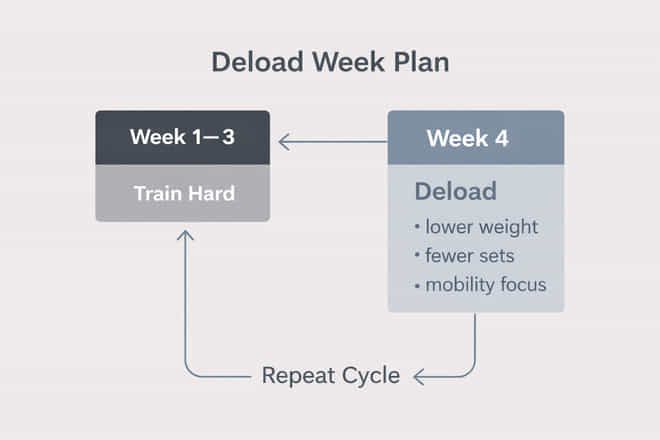
A deload week is a planned training week where intensity, volume, or both are reduced.
The goal is to keep your body moving while lowering the physical stress that builds up from weeks of heavy or high-effort workouts.

A deload week can look like:
- lifting lighter weights;
- doing fewer sets;
- focusing on controlled reps instead of pushing speed;
- swapping one heavy session for Pilates, yoga, or stretching;
- adding mobility work and longer recovery time.
It’s still training. It just feels calmer and cleaner.
Many women finish a deload week feeling more refreshed, lighter in their body, and surprisingly stronger.
Why strength progress depends on recovery
Strength training creates stress in the muscles and nervous system. That stress is normal. It’s how progress happens.
But progress doesn’t happen in the workout itself. It happens afterward.
When your body gets enough rest, sleep, hydration, and nutrition, it adapts. Muscles rebuild. Energy returns. Performance improves.
When recovery stays too low for too long, training begins to feel heavier. Motivation drops. The body starts carrying fatigue from session to session.
Dubai’s climate can make this even more noticeable. Heat affects hydration. Busy schedules affect sleep. Even a strong training plan can feel harder when the body is slightly depleted.
Deload weeks give the body a chance to catch up.
Deload weeks support muscle tone
Some women worry that going lighter for a week will set them back. That fear makes sense — especially when you’re chasing visible shape and definition. But in real life, deload weeks often speed things up.
When fatigue drops, your body starts responding again. Strength usually comes back fast the next week. Your muscles feel “online.” Your form is cleaner. The work hits where it’s supposed to.
Did you know “tone” doesn’t come from stacking more workouts? It comes from showing up consistently and training at the right intensity over time. Deload weeks protect that consistency.
What a deload week can look like in a real schedule
Deload weeks can feel simple and structured.
Here are a few common options:
Reduce weight, keep the same exercises
If you normally lift heavy, you can use 60–70% of your usual weight. The movements stay familiar, but the effort feels lighter.
Reduce volume
Instead of 4 sets, do 2. Instead of repeating circuits, do fewer rounds.

Swap one strength day for a recovery class
A Pilates or stretching class can replace one demanding strength session. The body stays active while recovery improves.
Focus on technique and control
A deload week is a good time to slow down. Cleaner form often means better results later.
This approach works well for women who enjoy structure and prefer staying in routine rather than fully stopping.
Modern tools that help plan deload weeks
Many women use wearables now, and they can be useful for recovery awareness.
Tracking sleep, resting heart rate, and HRV can give early signals that your body is under more stress than usual.
Some signs that show up consistently:
- your heart rate stays higher than normal;
- sleep feels lighter even after enough hours;
- workouts feel harder than they should;
- muscles stay heavy for days.
Wearables can highlight patterns, but real-life feedback matters too. Mood, energy, and motivation are often the clearest indicators. If training feels like it requires too much effort for too little return, a deload week often makes sense.
Why deload weeks matter even more in Dubai
Dubai is busy, fast-paced, and intense. Many women balance work pressure, family schedules, travel, and social life while still trying to train regularly. Add heat and dehydration, and recovery becomes a bigger piece of the fitness puzzle.
In this environment, deload weeks help prevent the slow burnout that happens when the body stays in “push mode” for too long.
They also fit naturally into Dubai routines. Some women schedule deload weeks around travel. Others use them during stressful work periods. Some prefer doing them in the summer months when fatigue builds faster.
The smartest training plan isn’t the hardest one. It’s the one you can follow for months.
Signs your body may benefit from a deload week
Deload weeks are often planned into a program, but sometimes your body signals it clearly.
Common signs include:
- strength feels lower in exercises that usually feel easy;
- soreness lasts longer than normal;
- sleep feels less restorative;
- energy drops during workouts;
- motivation feels flat.
These are not signs of weakness. They are signs of accumulated fatigue.
A deload week gives your system breathing room.
Summary: strength grows when training feels sustainable
Long-term strength and muscle definition come from consistent training.
Deload weeks support recovery, reduce fatigue buildup, and help your body respond better to the next training cycle. They also help keep motivation stable, especially for women balancing a demanding Dubai lifestyle.
If you want structured training that includes smart progress phases and recovery planning, explore the strength and conditioning formats at BODIFY. A well-designed routine includes both hard weeks and lighter weeks — and that balance is often what creates the best results.