


Train in Heels — Walk With Power Everywhere Else
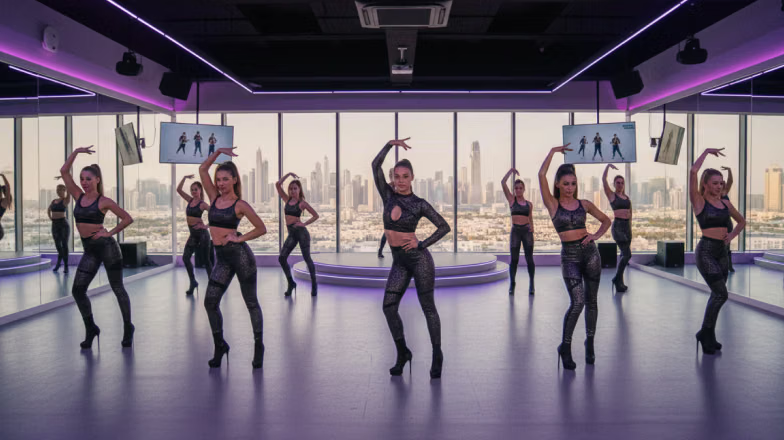
Women come to heels not to learn a dance, but to reclaim posture, presence, and confidence in their own bodies. In this guide, Nastya Bonds, co-founder of BODIFY fitness centre, breaks down how this training style fits the fast rhythm of city life — where how you move, stand, and carry yourself directly shapes how you are perceived.
At first glance, the heels dance looks like a performance. In reality, it is precision training for balance, stability, and body awareness. Step by step, repetition builds strength in the feet, legs, core, and nervous system. Over time, those changes leave the studio and enter everyday life — transforming how a woman walks into a room, holds her posture at work, and moves through space with calm authority instead of tension.
High Heels Dance Doesn’t Teach Confidence
It unlocks it.
Confidence in heels is not built by mindset alone. It is built through mastery over instability: control over balance, precision in weight transfer, and repeated success inside movements that once felt unsafe. Every beginner starts at the same point: basic walking patterns, posture alignment, and controlled shifts before any choreography appears. There is no shortcut here, only nervous system training through repetition.
Learning where to place the foot, how to shift the hips without losing center, and how to engage the core under load creates a physical sense of authority. This control does not stay inside the studio. Within weeks, students notice how movement stops feeling defensive and starts feeling deliberate.
The psychological shift follows the physical one with precision. As posture stabilises and balance becomes reliable, self-perception recalibrates. Even quiet, inward personalities discover that movement gives them something words never could — a clear physical voice, built step by step, through the body first.
What the Body Learns — From Shaking to Stead
Heels dance places the body into controlled instability by design. The elevated heel shifts the center of gravity forward, instantly forcing the legs, glutes, core, and spine to operate as a single precision system. There is no passive movement here — every step becomes a test of coordination and control.
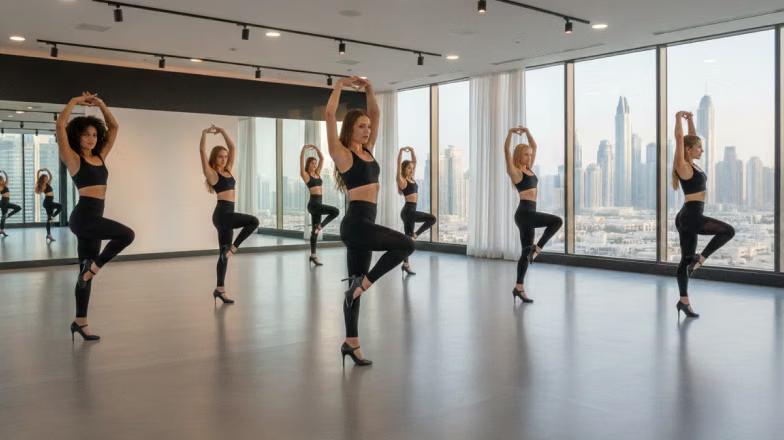
Training focuses on:
- Ankle stability, built through slow, deliberate rises and grounded descents
- Core engagement, especially during turns, shifts, and directional changes
- Upper-body isolation, creating clean, independent arm lines
- Timing and rhythm, sharpened through complex footwork patterns
Together, these elements reprogram spatial awareness and motor control. Students who once hesitated at simple transitions begin navigating layered sequences with calm consistency. For many, this is the most shocking part of the process — discovering that coordination is not a talent you’re born with, but a system the body can be trained into.
This Training Changes Your Body Far Deeper Than Aesthetics
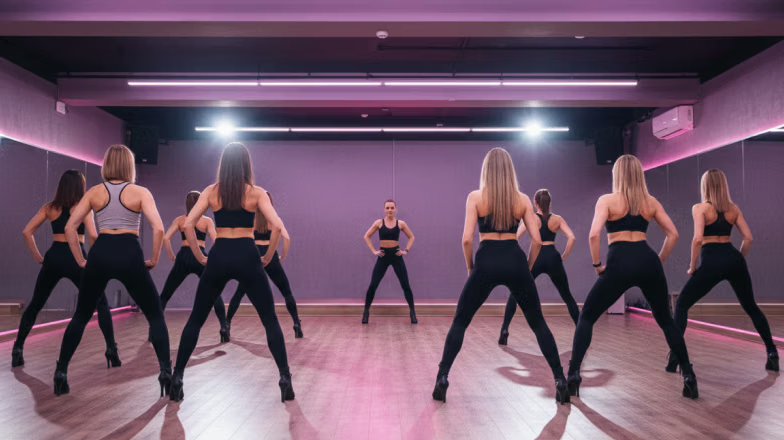
High heels dance wakes up muscles that usually “sleep” during regular workouts. Your calves become strong, your glutes start working even in small movements, helping you stay stable and in control. Your lower back feels more supported because your posture naturally improves.
As the moves get faster and longer, your heart starts working harder too. One class feels like a mix of strength training, cardio, balance, and stretching — all in one flow. Your whole body moves together, not in separate parts.
Many people come here for the vibe. But they stay because their body changes, we mean better shape, smoother walk, relaxed shoulders, and a lighter neck with less tension.
Daily Improvements Dancers Often Notice
These changes usually show up first in small, ordinary moments rather than during class itself.
- Smoother walking in regular shoes
- Better balance on stairs and uneven surfaces
- Stronger core engagement while standing
- More relaxed upper body posture
Over time, these physical shifts combine into a steadier way of moving that feels natural rather than performed.
Modern Teaching Methods in High Heels Dance
Today’s high heels classes are structured and methodical. Warm ups focus on ankle mobility, joint preparation, and foot strength before choreography begins. This approach reduces strain and builds safer movement patterns.
Choreography itself is taught in layers. First comes the walking pattern. Then arm placement. Then musical timing. Only after these elements settle does full performance energy appear. Some studios use mirrored walls, slow motion video review, and pacing variations inside a single class. These tools help students see how small technical changes affect their silhouette and balance.
Instructors also rotate floor work and standing elements to develop strength across multiple planes of movement. This balanced workload supports long term progress rather than quick performance results.
Dubai’s Approach to High Heels Training
Dubai’s style of high heels training mirrors the city itself — fast, ambitious, polished, and unapologetically expressive. Here, discipline is never dry, and freedom is never chaotic. Classes blend strict technical control with bold, confident movement. Many instructors come from commercial dance, Latin styles, classical ballet, and contemporary technique, creating a rich technical mix where power, elegance, and precision grow side by side.
The rhythm of the city shapes the rhythm of training. Most dancers juggle work, family, social life, and fitness all at once. Because of this, classes are built for maximum result in minimal time. No slow drifting into progress — every session is designed to move the body forward, even with just one or two classes a week.
The climate plays its part too. With fully temperature-controlled studios, training never stops. There are no seasonal breaks, no long pauses, no “starting over.” The body develops steadily, without interruptions, which makes progress feel faster and more reliable.
Dress codes stay professional but never restrictive. Studios keep a clean, respectful standard, while dancers express themselves through heels, outfits, and performance energy. Everyone looks different — but the level of focus, intention, and presence is the same.
Is High Heels Dance for You?
Most of our students walk in straight from office desks, service floors, and regular gyms — often with zero dance background. What draws them in is not stage ambition, but the chance to feel powerful, expressive, and physically present in their own body. The training welcomes beginners through a clear, step-by-step progression that builds skill without pressure.
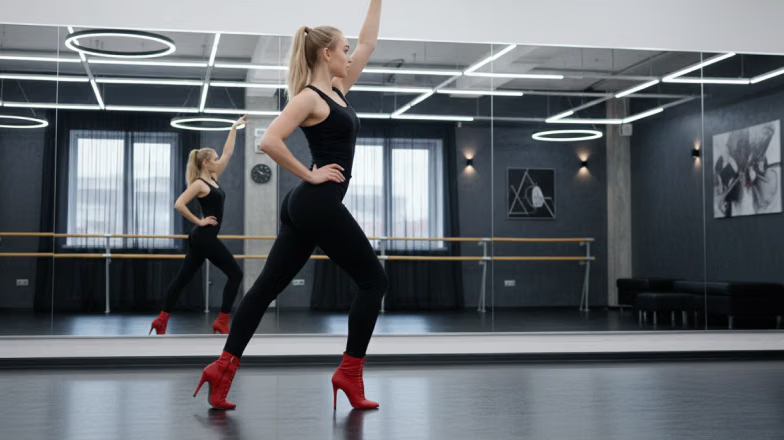
Classes are especially well suited for:
- Women rebuilding body confidence after long breaks, stress, or self-doubt
- Those craving expression without competition or comparison
- Fitness-focused students who want coordination, balance, and control challenges
- Dancers looking to expand their technical range and body awareness
Dancers with past injuries are not pushed blindly. Movements are adjusted, loads are built gradually, and clear instruction helps protect joints and prevent overload.
Progress looks different for everyone!
Safety, Footwear, and Training Expectations
Most beginners start with lower heels and good ankle support, and that’s exactly how it should be. First comes stability and confidence, height can come later. Each session usually begins with gentle joint warm-ups and ends with a calm cooldown. This helps release tension in the calves, keep the legs feeling light, and protect the ankles from overload.
From time to time, dancers are encouraged to warm up barefoot. It helps you feel the floor better, strengthens the feet naturally, and builds real balance instead of relying only on the shoes.
If you have past ankle or knee issues, it’s always best to tell your instructor before class. Most studios are happy to adjust the intensity so you can train safely and comfortably, without feeling limited.
The Emotional Shift Behind High Heels
Beyond technique and fitness, heels dance changes how people feel in their own body around others. Many dancers notice they have more confidence in posture during meetings, presentations, or social events. It is because training teaches the body how to take up space without tension or hesitation!
In class, everyone sees each other struggle, improve, lose balance, and find it again. Awkward moments feel normal. This creates a supportive space where growth doesn’t feel embarrassing.
You know why? Confidence grows not from comparison, but from shared effort. Small wins in the studio — a clean walk, a steady turn, a strong finish — slowly turn into a calmer, more confident presence in everyday life.
Summary
High heels dance builds balance, coordination, posture, and physical confidence through precise, structured movement. Strength, rhythm, and expressive control work together to reshape how the body moves and holds itself. The effects go beyond the studio: walking changes, energy shifts, and presence becomes steadier.
Dubai’s approach to training combines technical discipline with realistic scheduling, making this style accessible both for complete beginners and experienced dancers. For those who want to explore high heels training in Dubai in a structured, modern format, BODIFY offers programs designed around real lifestyles and steady, sustainable physical progress.