



How Often Should You Do Strength Training for Stronger, Toned Muscles?

First, if you’re aiming for a “toned” look, the main question is simple: how many strength workouts per week will actually change your body? For many women here in Dubai, life is busy, the heat is real, and you want a plan that fits around work, travel, and everything else.
This page explains strength-training frequency in clear language, with weekly schedules for different fitness levels and simple recovery tips so you feel stronger, not drained. Read on, choose the weekly plan that matches your routine, and start your first session this week.
What “Toned” Really Means? Strength + Muscle + Lower Body Fat
“Toned” is not a special kind of muscle. It’s a look you get when two things line up:
- You have enough muscle to give your body shape (like glutes, shoulders, and legs).
- Your body fat percentage is low enough that the shape is easier to see.
Body fat percentage means how much of your body is fat compared with everything else, like muscle, water, bone, and organs. A “lower” body fat percentage doesn’t mean tiny or weak. It usually means more definition from the muscle you already built.
Strength training builds that muscle. Food portions, protein, steps, sleep, and stress affect body fat. That’s why some women lift often but don’t see much change until recovery and eating patterns match the goal. For general health, training your muscles at least 2 days per week is a solid starting point.
Recommended Weekly Strength-Training Frequency
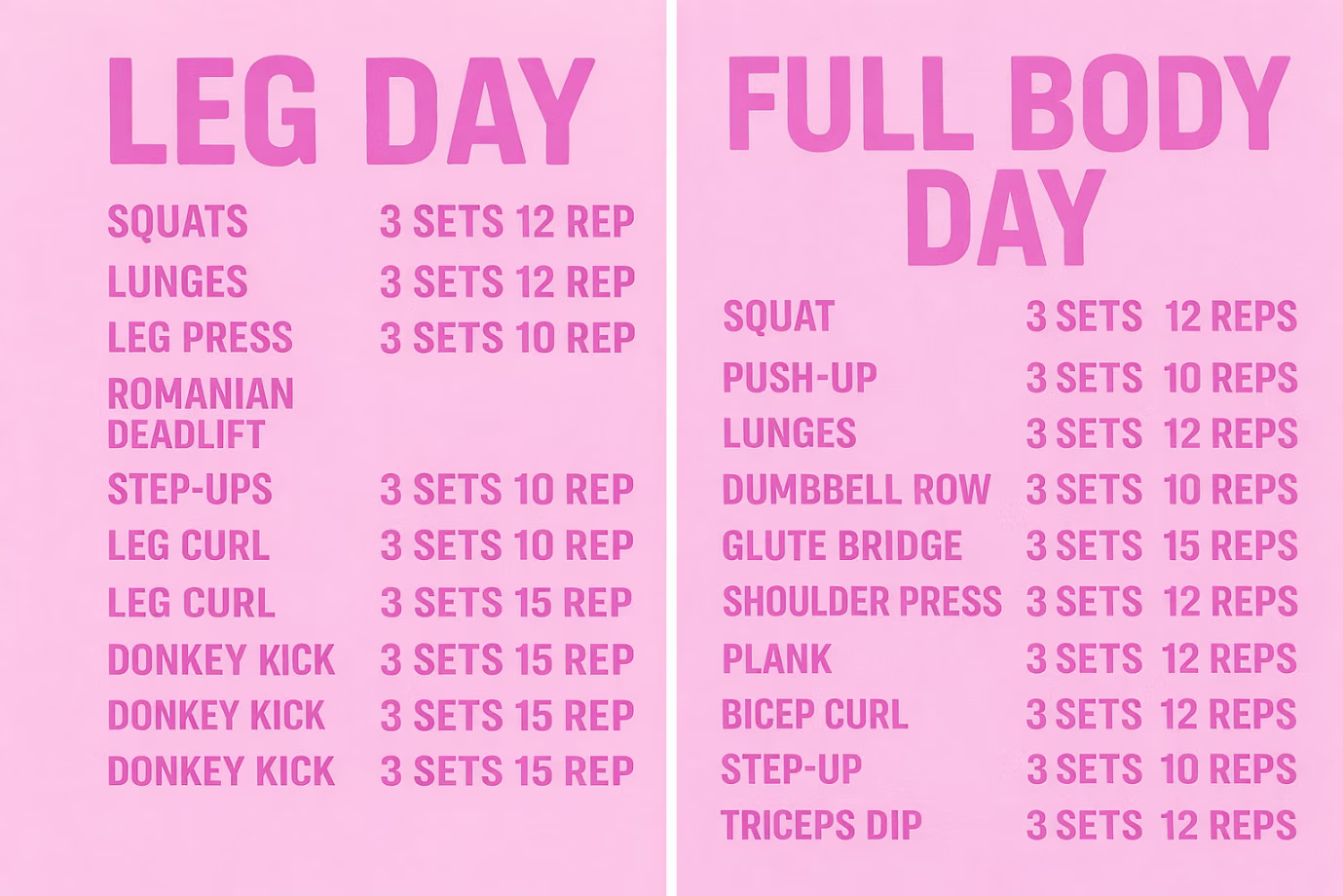
The best weekly plan is the one you can stick to, recover from, and repeat even when your week gets busy. For most women, a good starting point is training each major muscle group about twice a week, with rest time in between so your muscles can rebuild.
Next, the sections below break this into three clear paths. You’ll see what 2–3 days looks like if you’re new or coming back, how 3–4 days works when you want more steady changes.
If You’re New or Returning: 2–3 Days/Week
With a 2–3 days per week plan, most women do full-body sessions. That means you train legs, glutes, back, chest, and core in one workout, then rest a day or two before you repeat. Keep it simple and steady for the first few weeks. Aim for about 35–55 minutes, and pick weights that feel challenging but still let you move with control.
A session can use 4–6 main moves: a squat or leg press for thighs and glutes, Romanian deadlifts for the back of your legs, a row (cable or dumbbells) for your upper back, a press (dumbbells or machine) for chest and shoulders, then a short core finisher.
| Day | Main focus | Example exercises |
| Day 1 | Full body | Leg press, Romanian deadlift, seated row, dumbbell bench press, plank |
| Day 2 | Full body | Goblet squat, hip thrust, lat pulldown, shoulder press, dead bug |
| Day 3 (optional) | Short full body | Split squat, cable row, push-ups (incline), glute bridge, side plank |
If you feel very sore, drop the optional day and walk more instead.
If You’re Intermediate: 3–4 Days/Week
A 3–4 days per week plan lets you train hard without making each workout long. Many women use this level when they want clearer shape changes in a few key areas.
- Glutes and hamstrings (hip thrusts, Romanian deadlifts, step-ups)
- Shoulders and upper back (lat pulldowns, cable rows, dumbbell shoulder press)
- Core and posture muscles (Pallof press, dead bug, farmer’s carries)
With 3 days, you can do two full-body days plus one focus day for glutes and shoulders. With 4 days, an upper/lower split is simple: upper body on two days, lower body on two days, with at least one rest day midweek.
Keep your main lifts first (leg press or squats, hip thrusts, rows, presses), then add 1–2 smaller moves like cable kickbacks, lateral raises, or hamstring curls. Your goal is steady progress: a little more weight, one extra rep, or cleaner form each week.
How to Choose Your Best Schedule: A Simple “Ranking” Guide
If you’re stuck between two options, rank these factors from most important to least important. Your schedule should follow the top two.
- Goal: fat loss + shape, strength numbers, glute growth, posture and back strength, or sport performance
- Time: how many days you can train without rushing (even 40 minutes counts)
- Recovery: sleep, stress, steps per day, and how sore you tend to get
- Current fitness: brand new, returning, steady, or advanced
If time is tight, pick 2–3 days and keep it full-body. If your goal is muscle growth in specific areas and recovery is solid, 3–5 days often feels better. If sleep is messy, choose fewer days and make them count.
Recovery Rules That Decide Your Results. Rest Days, Sleep, and Muscle Soreness
Recovery is where your strength work turns into real progress. Give your body a little space to rebuild, and it will feel stronger week by week.
- Give the same muscle group about 48 hours before you train it hard again
- Aim for 7–9 hours of sleep most nights
- Use soreness as a guide: mild is fine, sharp pain is a stop sign
- Drink enough water and add electrolytes on hot days
If you feel mildly sore, warm up and train as planned. If soreness limits your range of motion, go lighter, use machines, and keep reps smooth. If pain is sharp or changes how you move, choose an easy walk or bike ride and get it checked if it keeps coming back.
A foam roller, short mobility work, or a sports massage can also help, especially if you sit a lot. Want this mapped out for you? Try a coached strength session at Bodify Gym in Dubai and start with a plan you can repeat.