


Menstrual Cycle and Training: How to Adjust Workouts Across the Month
Many women try to keep their workouts consistent, even when their body feels completely different from one week to the next. If you train through structured sessions like BODIFY’s fitness classes in Dubai, understanding how your cycle influences energy and recovery can make training feel more aligned instead of unpredictable.
Some weeks, you feel powerful and focused. Other weeks, the same weights feel heavier, and motivation dips for no obvious reason. That shift often has less to do with discipline and more to do with biology. Keep reading to understand more about the topic.
How your cycle changes workouts
Estrogen and progesterone rise and fall in a rhythm, and that rhythm affects more than mood. From time to time, you might notice changes in:
- energy levels;
- body temperature;
- recovery time;
- appetite;
- focus;
- how strong or coordinated you feel.
It’s why your training doesn’t have to follow a strict calendar, but should be divided into four phases.
The four phases, in real-life terms
Every woman’s cycle is unique. Some are shorter, some longer. Still, most follow a similar structure.
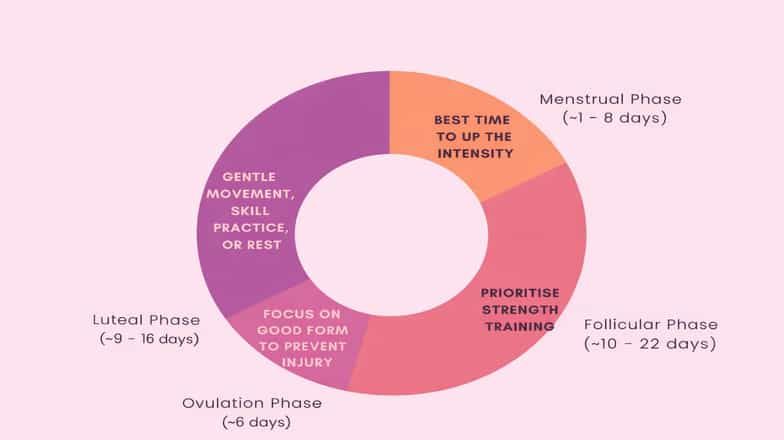
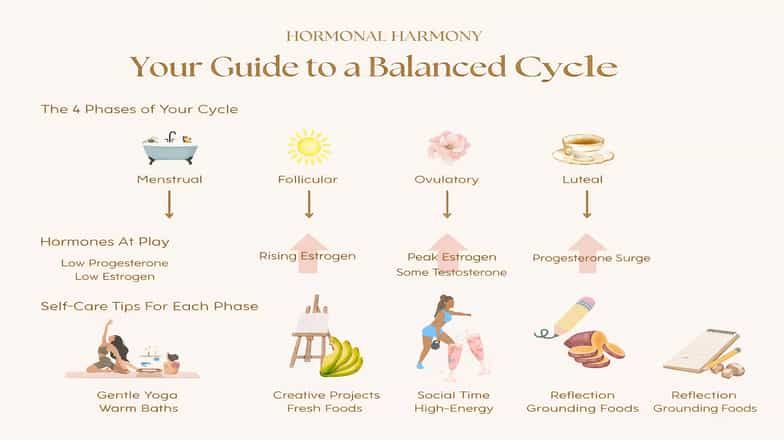
Menstrual phase
This is when your period starts. For a lot of women, the first couple of days feel a bit heavier — energy drops, and cramps or fatigue can kick in.
These are good days to keep things simple: gentle strength work, mobility, or steady, easy cardio. Some women actually feel better when they move because it can ease discomfort. Others feel like slowing down helps more. Both are completely normal!
Follicular phase
After the period ends, energy often rises steadily. Mentally, things feel clearer. Physically, workouts start to feel lighter.
This phase usually supports:
- strength progression;
- skill learning;
- higher intensity sessions;
- pushing slightly heavier loads.
It’s a week when you feel like you could do a bit more than usual.
Ovulation
Around the middle of the cycle, estrogen peaks. Many women at this moment feel strong, confident, and socially energised. This can be a great time for:
- performance-focused workouts;
- heavier lifts;
- athletic-style sessions;
- challenging classes.
Some women notice their flexibility increases slightly here.
Luteal phase
After ovulation, progesterone rises. Body temperature increases slightly. Recovery may feel slower. Legs can feel heavier. Cravings may show up.
This phase doesn’t mean pulling back completely. It often means adjusting expectations.
Moderate strength sessions, controlled tempo work, and slightly longer rest between sets usually feel better than chasing maximum output.
How to train across the month
Cycle-aware training doesn’t need spreadsheets, strict rules, or a “perfect” plan. It’s simply a way to train with your body instead of arguing with it. A few practical principles are usually enough.
Match intensity to how you feel (not what the plan says)
Some days you wake up feeling strong, sharp, and ready to push. Use those days well — add a bit more weight, another set, or a slightly harder interval.
Other days, energy is lower, motivation is flatter, or your body feels “heavier.” That’s not laziness — it’s information. On those days, your best move is often to shift the goal from performance to quality:
- cleaner technique;
- controlled tempo;
- better range of motion;
- less rushing, more control.
Simple check-in before training:
Ask yourself: “Do I feel like I can push today… or do I need to support my body?”
Both answers can lead to a great session, just a different kind.
Use RPE instead of fixed targets
RPE (Rate of Perceived Exertion) is the easiest way to train smart without overthinking. We wrote a nice article about that, but shortly, it’s a 1–10 scale of effort:
- 6/10 = challenging but comfortable, you could do a few more reps;
- 7/10 = solid work, you could do 2–3 more reps;
- 8/10 = hard, you could do 1–2 more reps;
- 9/10 = very hard, maybe 1 rep left;
- 10/10 = max effort.
The same weight can feel like a 6/10 one week and an 8/10 another week: sleep, stress, cycle phase, hydration, and workload all affect it. Most of your month can sit around RPE 6–8. Save RPE 9–10 for rare moments when you truly feel amazing.
Keep the habit, adjust the effort
When energy is lower, you don’t need to skip everything. You can keep momentum by changing the shape of the session:
- shorten it (20-30 minutes counts);
- reduce load;
- reduce sets;
- slow the tempo;
- swap intense cardio for steady movement;
- focus on mobility, core, or walking.
Sometimes the win is simply showing up and training in a way that leaves you feeling better afterwards.
If you’re unsure, start with a gentle warm-up. After 2–5 minutes you’ll know for sure whether you should continue or not.
Build a “base week” + “push days” approach
Instead of trying to train at 100% all month, aim for:
- a baseline routine you can always do (even on lower-energy days)
- plus push days when you feel strong
Example framework:
- Baseline sessions: technique + moderate strength (RPE 6–7)
- Push sessions: heavier strength or higher intensity (RPE 7–9)
- Support sessions: mobility, walking, Pilates, easy cardio
Nota Bene: it’s always better to consult on the frameworks with a professional coach.
Modern tools that make this easier
You don’t need to become “data-obsessed” to train with your cycle. But a few simple tools can help you spot patterns and make smarter choices.
Cycle tracking apps
Apps like Clue or Flo can be useful because they help you connect mood, energy, cravings, cramps, and training performance over time.
What to track (keep it minimal):
- day of cycle (obvious, but key);
- energy (low / medium / high);
- symptoms (cramps, bloating, headaches, soreness);
- training felt like (easy / normal / heavy)
After 2-3 months, you usually start seeing your “usual story.” Then you can plan workouts with more confidence.
Wearables and recovery data
A smartwatch or wearable can give you quick signals like:
- sleep quality / sleep duration;
- resting heart rate
- HRV or recovery score (depending on device).
These numbers aren’t always the truth, but they’re often a good mirror. If your sleep is short and your resting heart rate is up, it makes sense that lifting feels heavier or your cardio feels harder. Instead of forcing the session, you can adjust it depending on your state and still get a great workout.
How to use it without overthinking:
- Green day / good sleep = push a bit (heavier sets, extra set, faster intervals);
- Yellow day = keep it moderate (RPE 6–7, focus on clean reps);
- Red day / poor sleep = support session (mobility, walking, lighter strength).
The win is not a perfect number, please remember!
Breath and core awareness
Not everything has to be tracked. Sometimes the most powerful “tool” is just a reset for your nervous system. Try this before a set when coordination feels off or you feel wired:
- one slow inhale through the nose;
- longer exhale (as if fogging a mirror, but with lips closed);
- then brace your core gently, like you’re tightening a belt one notch.
Quick takeaway: apps help you see patterns. Wearables help you adjust early. Breathing and bracing help you feel stable in the moment.
Training in Dubai: extra factors to consider
Living in Dubai adds its own layer.
Heat affects hydration. Late nights affect sleep. Travel schedules shift routines. Stress levels can fluctuate with fast-paced work environments.
All of that interacts with your cycle.
That’s why flexibility becomes so important! Some weeks, you lean into intensity. Other weeks, you lean into control and recovery. Both contribute to long-term strength and tone.
For many women training for posture, definition, and confidence, that balanced approach works better than pushing at the same intensity all month.
Training with awareness and flexibility
Your menstrual cycle influences how your body responds to stress, strength work, and recovery. Some phases naturally support heavier training. Others support steadier, controlled sessions.
When you adjust intensity across the month, consistency becomes easier. Progress feels smoother. Workouts feel less like a fight and more like a rhythm.
If you’d like structured sessions that allow room for that flexibility, explore the group classes and training formats at BODIFY. With the right guidance, you can stay strong through every phase of the month, while still enjoying the process.